Determining Light Brightness and Intensity of LEDs
Lighting Specifications Explained
Many people often wonder what all those LED specifications mean. Watts, lumens, flux, wavelength, candle power, candelas, and millicandelas are just a few of the many terms and units of measurement used to describe light intensity. Although photometry is much more complicated than I can even begin to explain, here are just a few things about lighting specifications you should look for to determine the brightness of a light source.Luminous Intensity and Viewing Angle
When looking at the brightness specifications of LEDs, the most common specs available are luminous intensity (usually measured in units of candelas or millicandelas) and viewing angle (measured in degrees). The brightness of 1 candela is roughly around the same brightness as a common candle. A millicandela, or mcd, is 1000 times less bright than a candela, hence the prefix "milli-."1000 millicandelas = 1 candela
Since light is not always evenly dispersed, the viewing angle of a light source is also an important lighting specification to keep in mind. The location of the beholder determines the output of light, so if you want a single light source that will light up an entire room, ensure the viewing angle is wide enough to provide such light.
This is also a matter of the lens; diffused lenses provide a wider viewing angle than a clear lens, but the tradeoff is that diffused lenses may make the LED appear dimmer than it usually would.
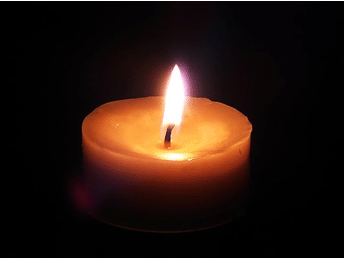 Candle Basis of Light Intensity
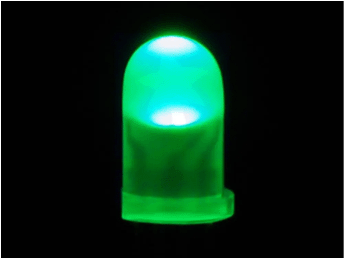 LED with Diffused Lens
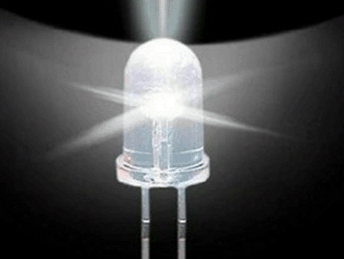 LED with Clear Lens
The wattage of an incandescent lamp or LED lamp tells you how much power consumption that particular lamp will draw, not necessarily the power output of the lamp. This is how a smaller wattage rating on an LED lamp can give a higher lumen output than incandescent lamps. This lighting specification is what makes LEDs save more energy and provide brighter lighting.
Another spec to look at is luminous flux, or luminous power, which can be found if the luminous intensity and viewing angle are known. Luminous flux is the power of light as perceived by the human eye with respect to the wavelength of light being emitted and is usually measured in lumens.
Note: Without getting too mathematical, the viewing angle in degrees is converted to steradians, then multiplied by candelas to get lumens.
Here is a helpful site that allows you to easily convert from candelas to lumens.
As you can see in these lighting specifications, the viewing angle makes a great difference in the luminous flux. An LED with 5000mcd and 60° viewing angle is about four times as powerful as one with just a 30° viewing angle.
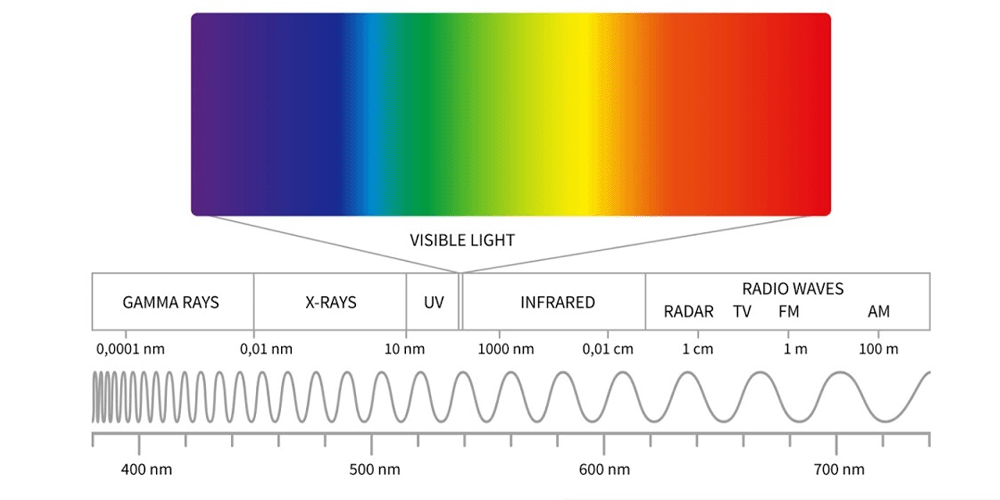
Wavelengths do not necessarily provide much information on the brightness of a light source but rather on its color and hue. Given that certain colors are brighter than others, wavelength is another specification to consider.
|